Article
Apr 11, 2026
Why Traders Keep Repeating The Same Mistakes
AI automation is transforming the way businesses operate, from streamlining workflows to enhancing decision-making. In this article, we explore the latest trends, innovations, and real-world applications that are reshaping industries worldwide.

Why Traders Keep Repeating the Same Mistakes
One thing I keep coming back to is this: the trading brain is trying to handle too much at once.
Every year we live through millions of moments. Most of them disappear. A few stick. And somehow, in trading, the lessons that should be the clearest are often the ones that go missing at the worst possible time.
That has always fascinated me.
Because when I look back at my own trading, some of my worst mistakes were not caused by a lack of knowledge. They were caused by a lack of recall in the moment. I already knew revenge trading was a bad idea. I already knew what happened when I cut winners too early just to feel safe. I already knew what happened when I let losers sit because I wanted the market to save me.
But knowing something in general and remembering it in real time are two very different things.
That is where trading becomes far more psychological than most people want to admit.
What causes repeated trading mistakes?
For a long time, I thought repeated trading mistakes meant I needed a better strategy.
Sometimes that was true. Going all in blindly was obviously a terrible idea. But once I started using more logical systems and more structured setups, I realized the real problem was usually not the strategy itself.
The real problem was what happened when the strategy failed.
Every strategy goes through periods where conditions are poor. That is normal. What destroys traders is not just the losing period. It is the emotional reaction to that losing period.
I would remember the red day. I would remember the frustration. But I would not clearly remember the impatience before the entry, the need to make the money back, or the exact moment I stopped following my plan.
That is where accounts get damaged.
Not because the market changed.
Because behavior changed.
Why traders keep repeating the same mistakes
This is the brutal part of trading: you can know better and still do the same dumb thing again.
I know because I have done it myself more times than I want to admit. RIP Robinhood, Webull, Tastytrade, IBKR, and more recently, funded accounts too. I have revenge traded after a frustrating loss. I have cut a winner early just to feel safe, only to watch it keep running. I have held losers longer than I should have because hope felt better than admitting I was wrong, even when I had multiple chances to cut the trade early or get out at breakeven.
Then later I would sit there angry at myself thinking, how did I do that again?
Part of the answer is memory.
For me, that gets even messier because I have ADHD. My recall already has gaps, and when frustration kicks in, it gets worse. But even beyond that, psychology gives a pretty clear explanation for why traders repeat mistakes. Under stress, people tend to shift away from deliberate, goal-directed decision-making and fall back into more habitual behavior. In plain English, when pressure rises, we do not automatically become more logical. We usually default to whatever pattern is already wired in. Research on stress and habitual behavior
That matters a lot in trading.
If your default pattern is revenge trading, oversizing, forcing entries, or moving stops, stress is not going to magically make you disciplined. It is more likely to pull you deeper into the exact behavior that has already hurt you before.
There is another layer to it too. Emotion does not preserve every part of an experience equally. Research on emotional memory shows that people often remember the emotional punch or central gist of an event more clearly than the smaller background details around it. So a trader may remember, “that day felt awful,” while forgetting the tiny trigger that actually started the spiral. Research on emotional memory and detail loss
That is why repeated mistakes feel so confusing.
You remember the pain. You remember the red number. You remember how bad the day felt. But you do not always remember the impatience before the entry, the need to make the money back, or the exact moment you stopped following your plan. And if you cannot clearly recall how the pattern starts, you usually only notice it once the damage is already done.
There is also a harder truth underneath a lot of bad trading decisions: losses hit harder than gains feel good. Kahneman and Tversky’s work on prospect theory showed that people weigh losses more heavily than equivalent gains. In trading, that helps explain why a small open loss can feel unbearable, why a decent winner can feel too fragile to hold, and why traders do irrational things just to get away from discomfort. Kahneman Nobel lecture / prospect theory source
That is why I do not think repeated trading mistakes are usually just a strategy problem.
A lot of the time, they are a recall problem, a stress problem, and a self-awareness problem. The chart might look different each day, but the behavior underneath it is often the same. And if you do not review that behavior properly, it will keep showing up again and again until it takes another account with it.
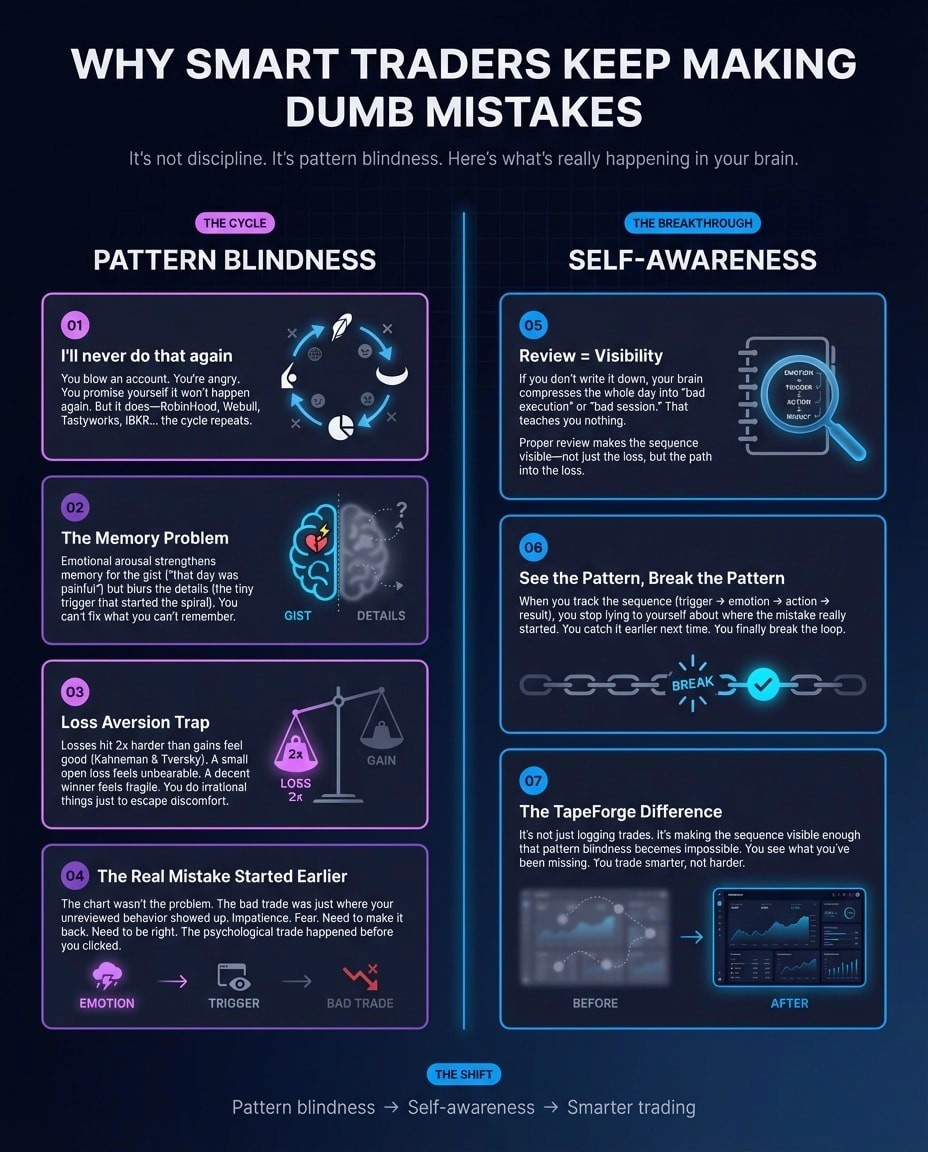
A real trading example
On April 1, 2026, the market did not want to do what I wanted. Instead of accepting that, I kept pushing.
That was the mistake.
The worst part is that because I did not journal that day, I cannot fully remember my exact thought process. I remember the pain of the loss. I remember how emotional it felt. And I remember knowing, deep down, that I was trading on tilt.
Here is the sequence as best as I can reconstruct it.
At 9:41 AM EST, I entered a short with my normal size on a 150k prop account. The trade actually went in my favor at first, then reversed and hit my stop.
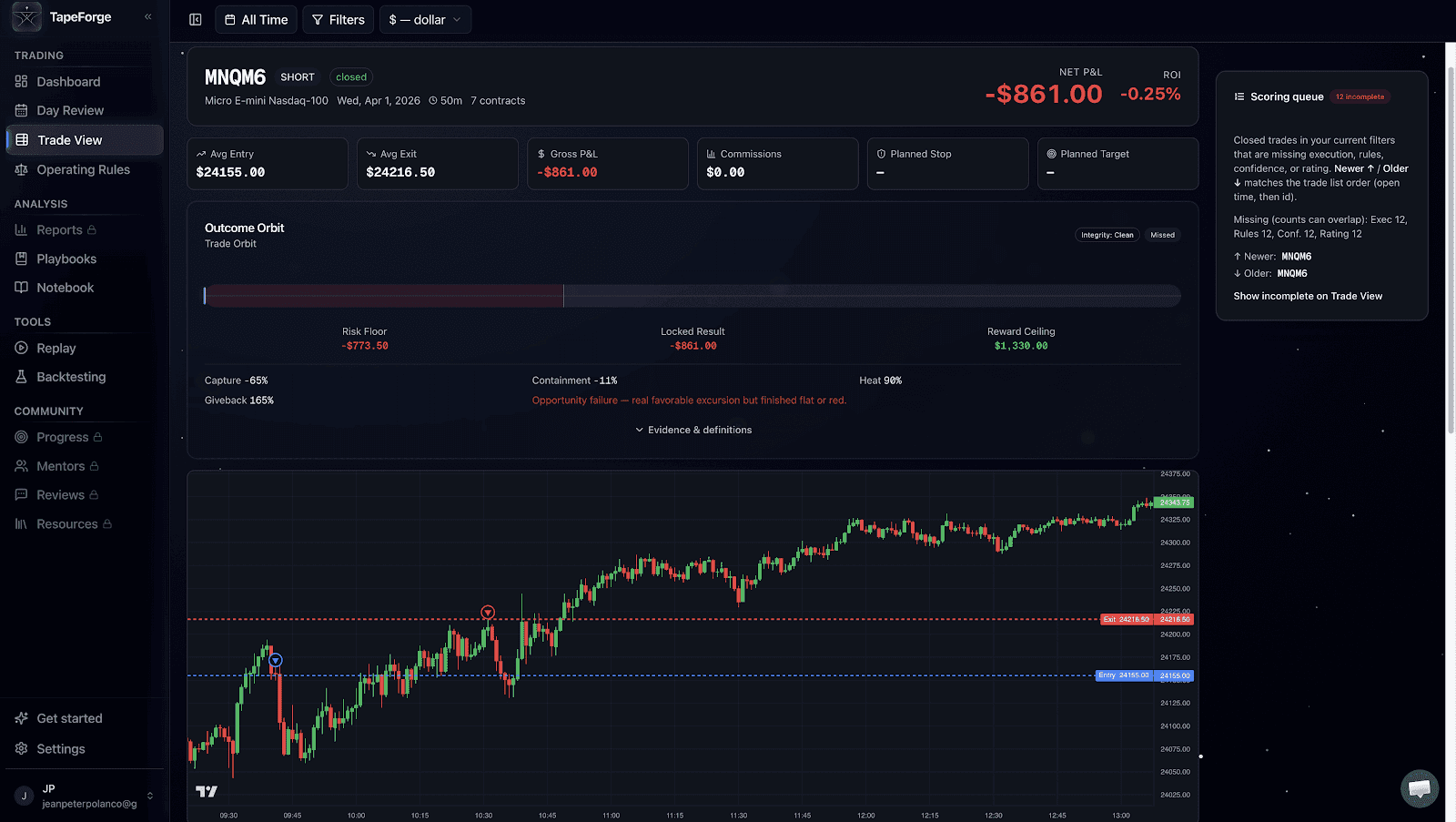
*First loss. Still manageable.*
That is where things started slipping.
I convinced myself my stop loss had been hunted. Within about 10 minutes, I entered another short, this time with almost twice the size and a tighter stop.
Boom. Stopped out again within about 5 minutes.
That one hurt.
Now I was down roughly $2,115, which was already $615 past my actual max daily loss for that account.
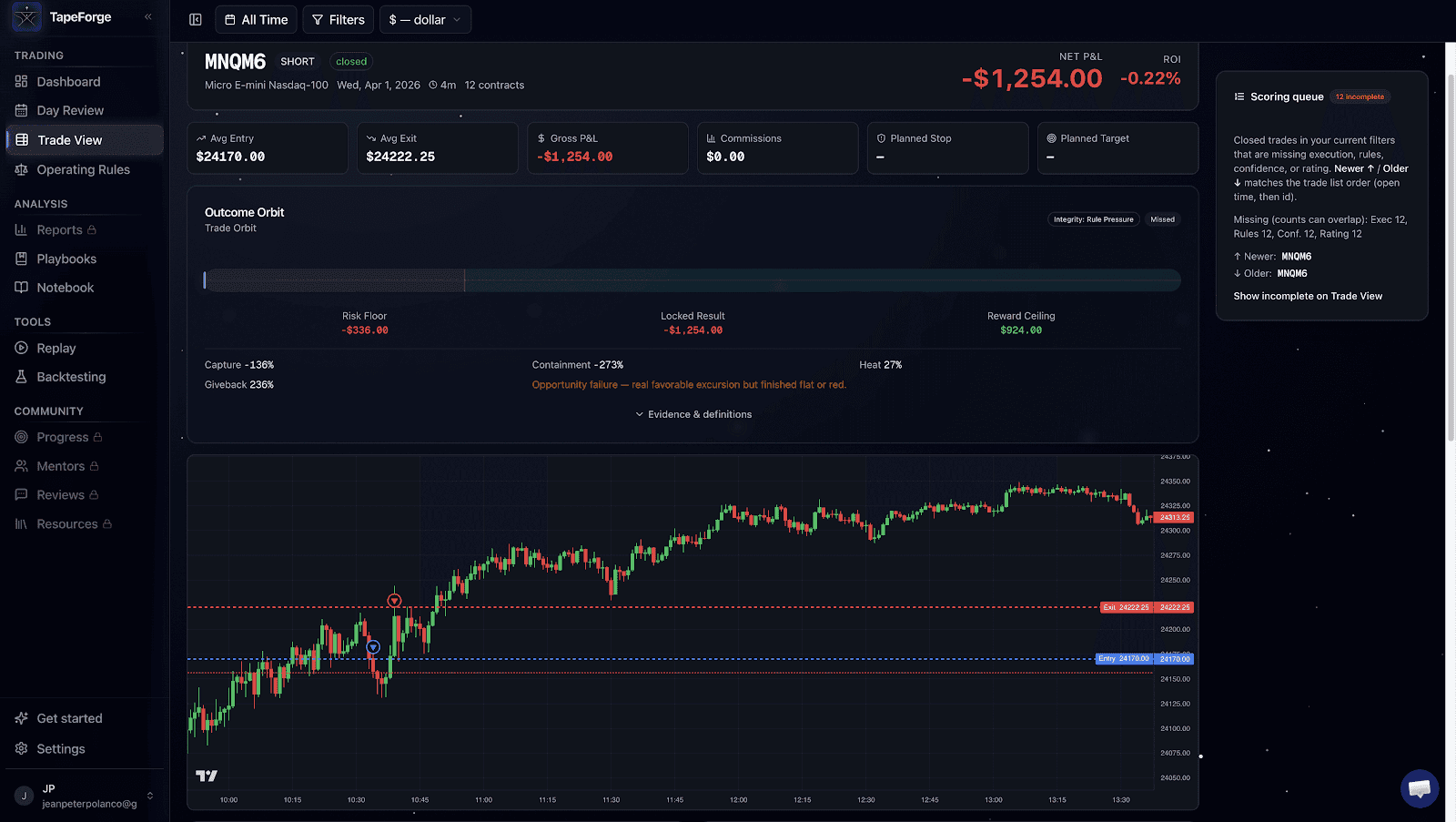
*Second entry was no longer clean decision-making. It was reaction.*
You would think I would have stopped there.
I did not.
At that point, I wanted to force the market to go my way. It felt like I was challenging it.
“Okay then, here is another huge short. There is no way you hurt me again.”
Well, it did.
Less than 5 minutes after the previous loss, I entered a max-contract short. Not surprisingly, that one got stopped out too, about 8 minutes later, for another huge loss of $2,101.
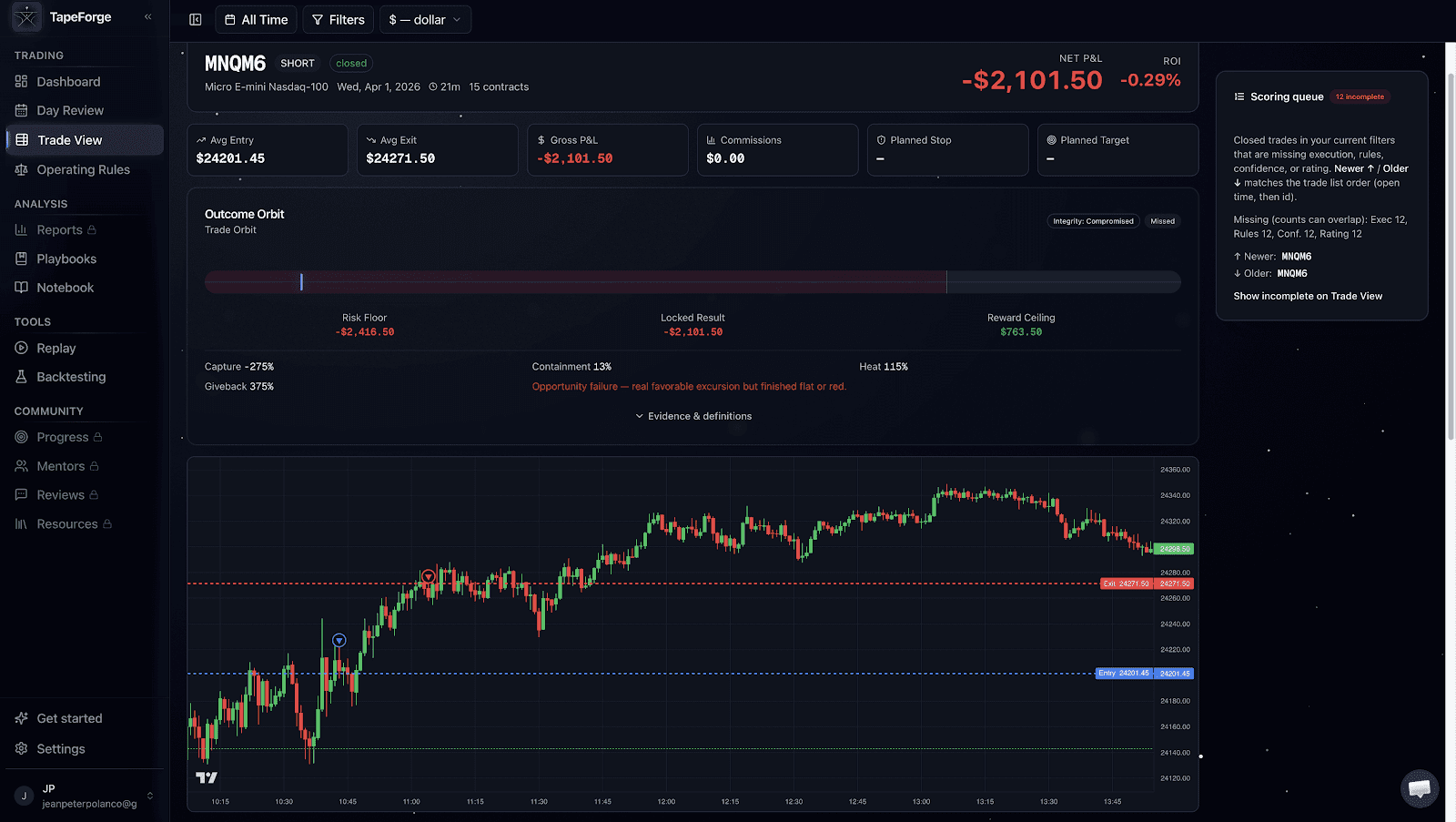
*By the third short, I was no longer trading the chart. I was trading my frustration.*
At that point I was so deep in the hole on a fresh 150k eval that I basically thought, whatever. I flipped long and made back a small $405.
But that did not change the day.
I still finished down $3,774 on a day where my max loss should have been $1,500.
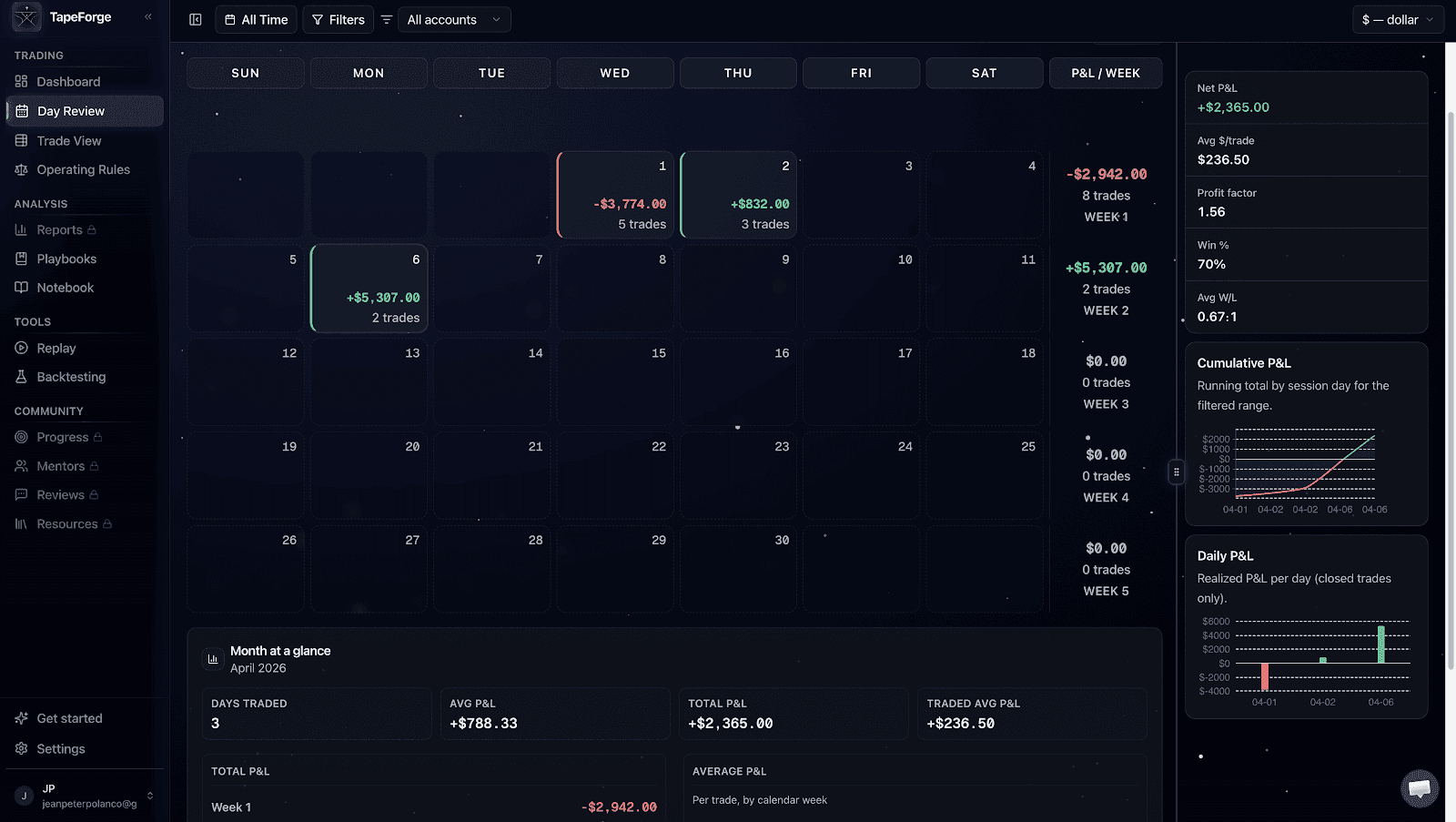
The PnL damage was visible. The behavioral damage started much earlier.
Thankfully, I did not blow the account.
But if I keep repeating this pattern, I will.
I felt terrible after that day.
I am writing this about a week later, and even now it took effort to piece together why I made those decisions. That is the part that bothers me most. In the moment, it all felt justified. A week later, it is obvious it was emotional chaos.
And that is exactly why this matters.
From experience, I have noticed that my brain does not always surface these painful trading sequences when I need them most. I remember the pain. I remember the big red number. But I do not always remember the chain of decisions that created it.
That chain is the real lesson.
The actual pattern here was:
seeing open profit disappear
frustration after getting stopped out
feeling like my stop was hunted
forced re-entry with bigger size
doing it again even after breaking my loss limit
emotional loss expansion
That sequence matters more than the chart itself.
The same chart setup could show up again tomorrow and, realistically, I could take the first short and still get stopped out. That part is normal. Losses happen.
But if I do not remember why the tilt happened last time, there is a good chance I repeat the part that actually does the damage: the emotional re-entry, the size increase, and the need to force the market to prove me right.
That is the real mistake.
Not the first loss.
The spiral after it.
How to improve your trading psychology step by step
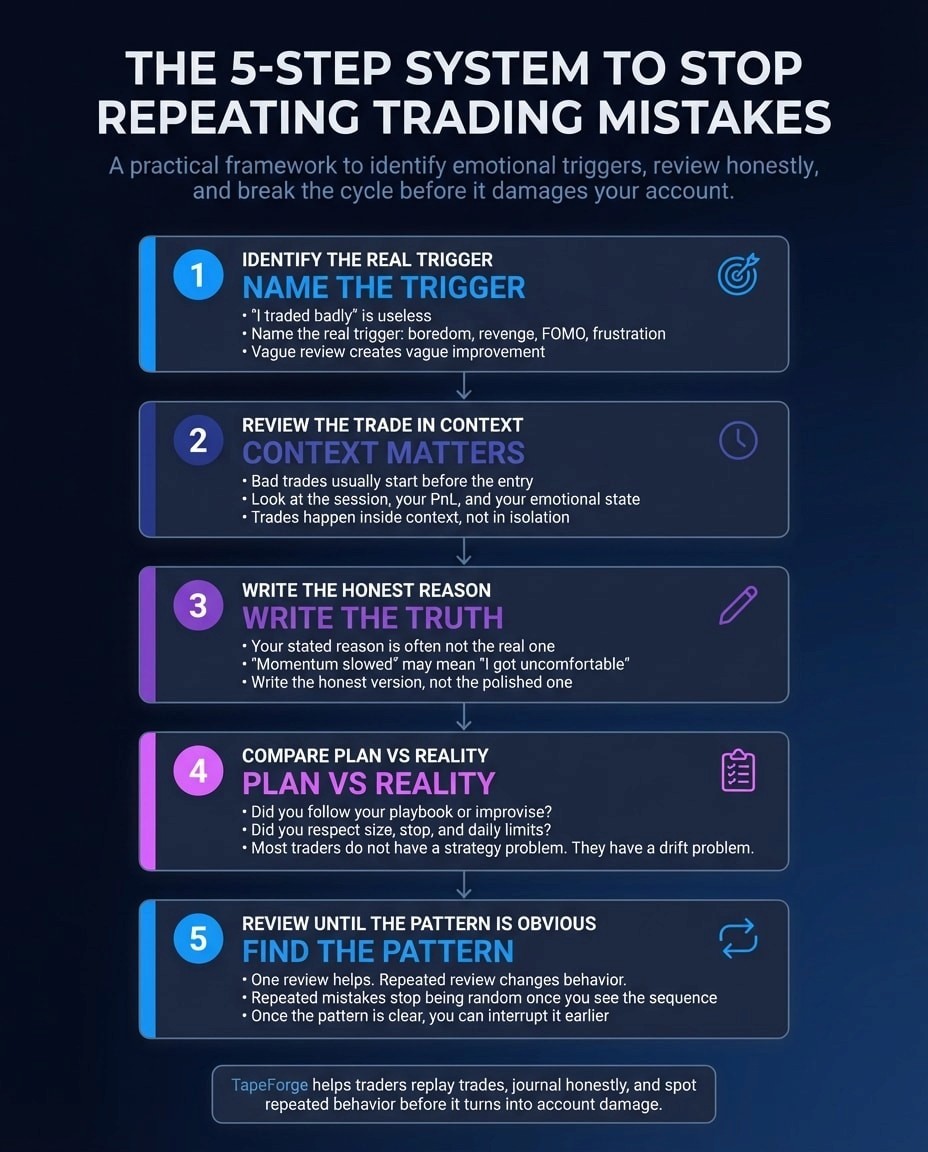
1. Identify the exact trigger
Do not stop at “I traded badly.”
That tells you almost nothing.
The real value comes from naming the thing that actually started the mistake. Was it boredom? The need to make money back? Frustration after a stop-out? Fear after seeing open profit disappear?
The more specific you are, the more useful the review becomes. Vague review creates vague improvement.
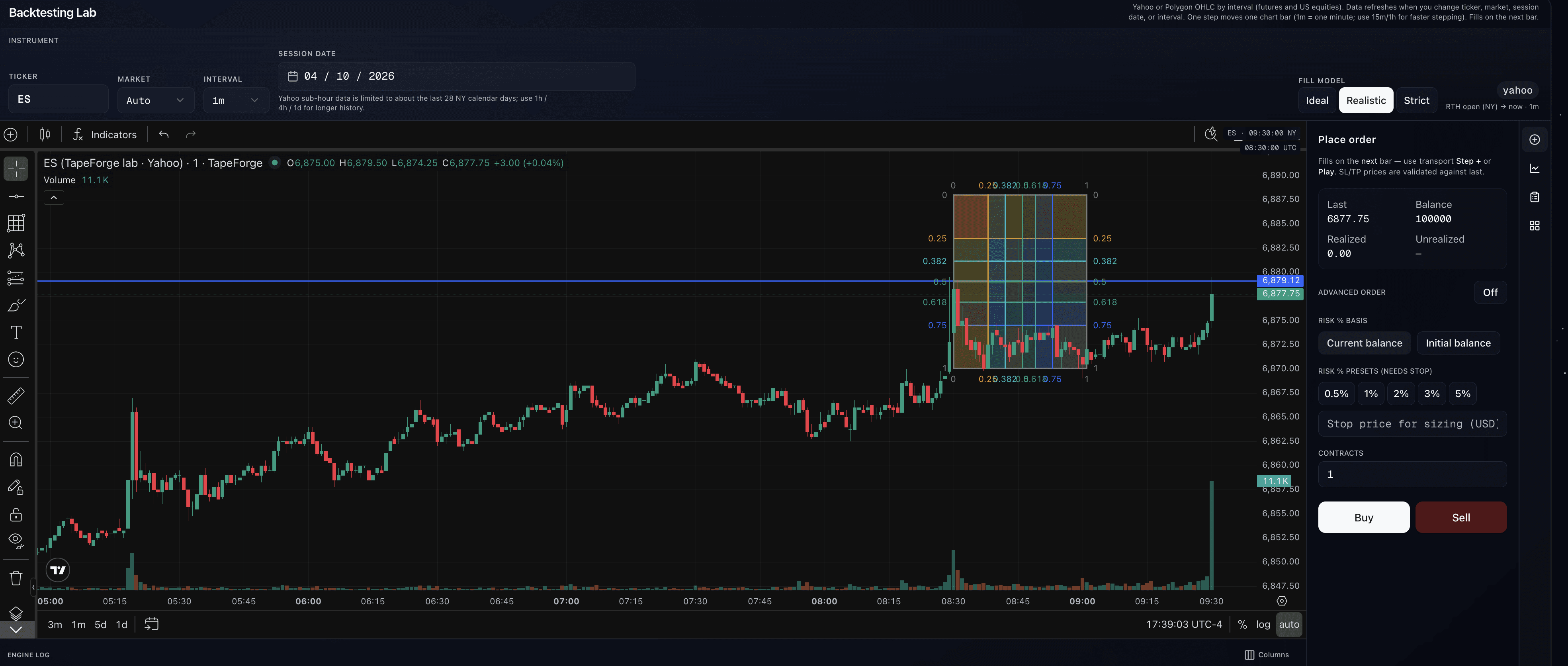
2. Review the trade with context
A bad trade usually starts before the entry.
Look at what happened leading into it. What session was it? Were you already green on the day, or were you trying to dig yourself out of a hole? Did you feel calm, impatient, frustrated, or like you needed something to happen right now?
This matters because trades do not happen in isolation. They happen inside a mental and emotional state.
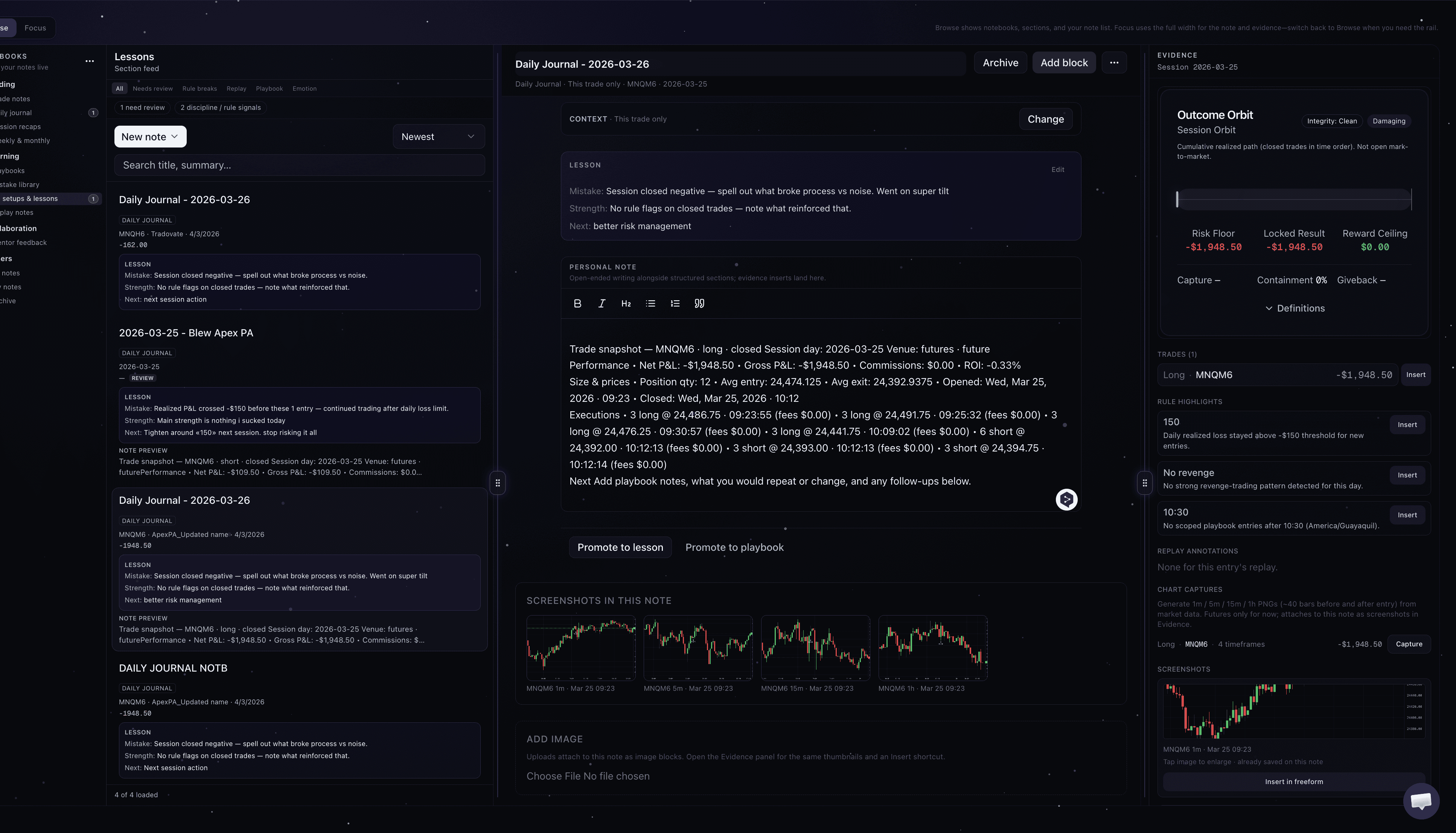
3. Write down the real reason for the entry and exit
This is where most traders get exposed.
The reason you tell yourself and the real reason are often not the same. “I exited because momentum slowed” may actually mean “I got uncomfortable.” “I entered because the setup looked good” may actually mean “I did not want to miss the move.”
Write the honest version, not the polished one.
That is when review starts becoming useful.
4. Compare your live behavior to your planned behavior
This is the gap that matters most.
Did you actually follow your playbook, or did you start improvising once money was on the line? Did you respect your size, your stop, and your daily risk limits? Or did emotion quietly take over after the first trade went against you?
Most traders do not have a strategy problem.
They have a drift problem.
5. Review it enough times that the pattern becomes obvious
One review can help.
Repeated review is what actually changes behavior.
When the same mistake shows up over and over, it stops feeling random. Now it has a shape. Now it has a trigger. Now it has a sequence. And once you can clearly see that sequence, you have a real chance of interrupting it next time.
How TapeForge helps
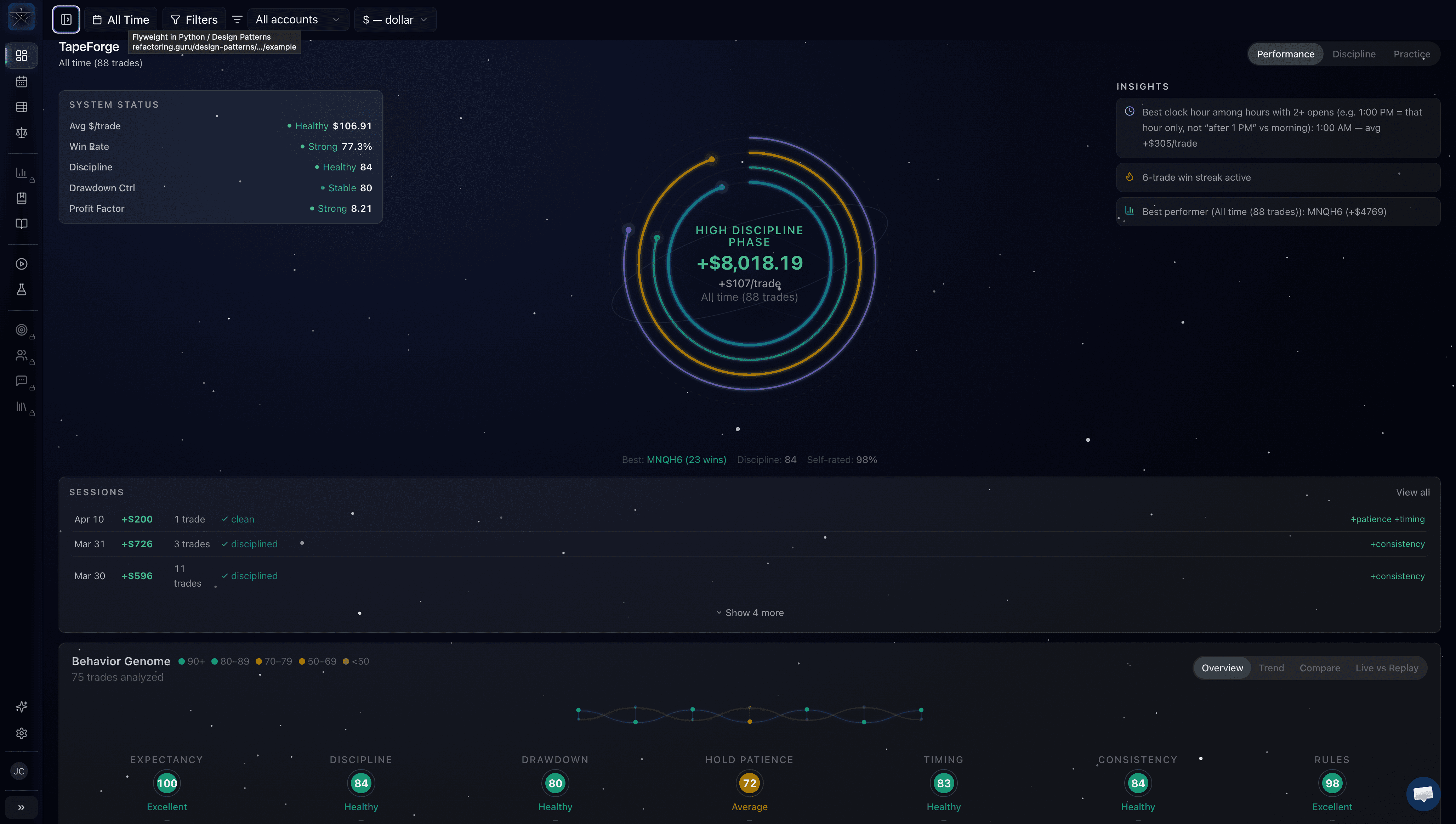
I built TapeForge for this kind of work.
Instead of only showing profit and loss, it helps traders review the trade, replay what happened, log the reasoning, and spot repeated behavior that usually stays hidden.
A good trading journal should help you answer questions like:
Where does discipline usually break down?
Do I cut winners because the setup failed or because I got uncomfortable?
Do my worst losses start with one bad trade or one bad emotion?
Am I actually following my playbook or rewriting it live?